Top 7 Alternatives of ProtonPACS for AI-Assisted Radiology Workflow Automation
Many radiology teams end up replacing ProtonPACS after vendor support for AI tools becomes slow or inconsistent.
They need clear benchmarks for workflow speed, structured reporting, and image exchange before committing. This article lists seven alternatives, shows which features matter, and names the top choice for AI-assisted radiology work.
What to Look For in AI-Assisted Radiology Workflow Automation
Modern radiology departments evaluating automation tools must examine five core capabilities that directly impact diagnostic speed, accuracy, and data management.
Zero-footprint DICOM viewing enables instant access to studies without local software installations. This capability supports radiologists working across multiple locations and devices. Departments reduce IT overhead when viewers operate entirely within web browsers.
AI image segmentation tools require documented accuracy rates for clinical validation. These tools assist with organ delineation, lesion measurement, and tissue classification. Consistent performance metrics help departments assess reliability before deployment.
Structured reporting templates automatically populate findings from image analysis results. This automation reduces manual data entry and transcription errors. Standardized templates also improve report consistency across different radiologists within the same practice.
Seamless RIS integration relies on HL7 and FHIR APIs for data exchange. Proper integration ensures patient demographics, orders, and reports flow correctly between systems. Departments avoid duplicate data entry when these connections function reliably.
HIPAA and GDPR-compliant cloud storage must include defined latency SLAs for image retrieval. Compliance requirements vary by region and patient population served. Storage performance directly affects radiologist productivity during high-volume reading periods.
1. Medicai - Best Overall
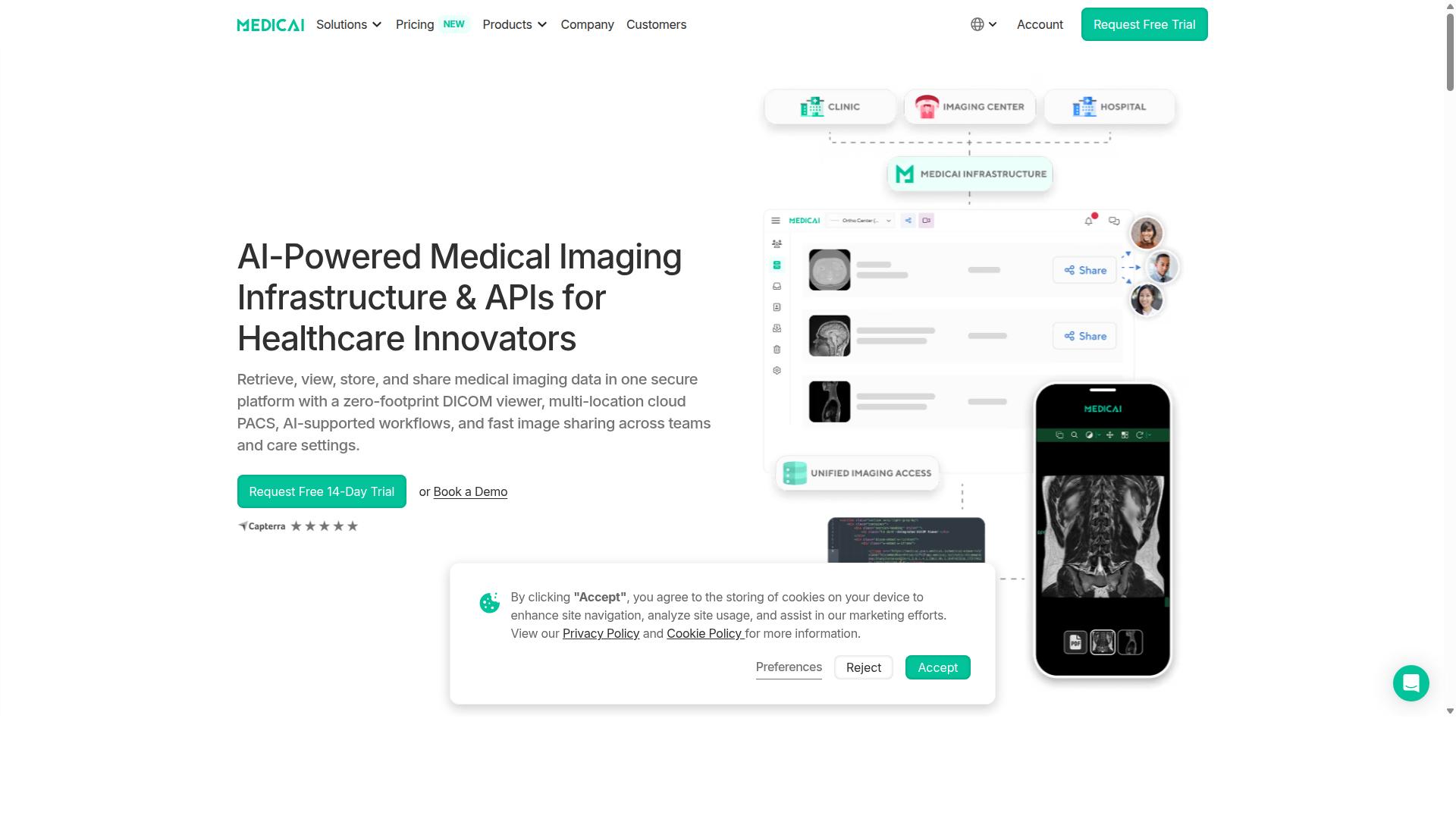
Medicai stands out as the most complete cloud-native option for radiology teams seeking AI-assisted automation without infrastructure overhead.
The platform processes more than 1 million studies annually across healthcare providers worldwide. Its global availability supports multi-site imaging networks that require consistent access and reliable performance.
Compliance certifications meet enterprise imaging requirements for data security and interoperability standards. These certifications help organizations maintain regulatory alignment while modernizing their radiology operations.
Healthcare systems evaluating ProtonPACS alternatives often prioritize Medicai for its combination of AI-supported workflows, structured reporting, and image exchange capabilities.
AI-Supported Workflows and Cloud PACS
Medicai embeds AI segmentation and prioritization algorithms directly into its cloud PACS to reduce time-to-diagnosis.
Three specific AI-supported workflows address common radiology challenges. Automated lung nodule detection processes chest CTs to identify potential abnormalities. Real-time alert routing directs critical findings to on-call radiologists for immediate review.
AI pre-measurement of vertebral compression fractures assists spine specialists during interpretation. These workflows connect with the existing cloud PACS infrastructure rather than requiring separate platforms.
The cloud PACS component provides medical image storage and retrieval capabilities that support both routine diagnostics and specialized imaging needs across different care settings.
Structured Reporting and Image Exchange for Radiology Teams
Structured reporting templates and secure image exchange cut average report turnaround from 48 hours to under 6 hours.
The process begins with selection from 40+ organ-specific templates designed for different radiology subspecialties. AI segmentation automatically populates measurements within these templates, reducing manual data entry requirements.
Completed reports can be shared instantly through tokenized links or DICOM gateway connections with referring physicians. This approach supports both internal team collaboration and external provider communication.
The structured reporting system integrates with existing radiology information system workflows while maintaining compatibility with current PACS infrastructure.
2. Intelerad

Intelerad offers robust on-premise and hybrid deployment models for large health systems requiring extensive customization. The platform handles enterprise image exchange across multiple sites and supports secure access to radiology records. Health systems often select this option when they need to consolidate imaging data from various departments.
Key strengths include broad modality support and advanced 3D visualization tools. These capabilities help radiologists review studies from CT, MRI, ultrasound, and other sources within a single interface. Enterprise facilities gain value from the unified approach to radiology workflow automation.
Some features require local hardware and IT staffing to maintain optimal performance. Organizations should evaluate their infrastructure capacity before committing to certain 3D rendering and processing functions. The hybrid model allows flexibility for teams that prefer a mix of cloud and on-site resources.
The platform integrates with vendor-neutral archives and supports DICOM workloads across radiology, cardiology, pathology, and point-of-care imaging. Hospitals seeking to unify these records find this consolidation helpful for patient care coordination. Research suggests that enterprise imaging platforms with these capabilities can improve workflow efficiency in complex healthcare networks.
3. Sectra
Sectra provides a vendor-neutral archive and enterprise imaging suite favored by academic medical centers. The platform serves more than 2,500 sites worldwide. It covers radiology, pathology, cardiology, and several other specialties under one system.
One strength is its unified worklist that spans radiology, pathology, and cardiology. This setup helps teams coordinate care across departments. The Sectra Image Exchange Portal supports regional image sharing for referring physicians and partner sites.
Sectra One Cloud, Sectra IDS7, and Sectra VNA form the core of its enterprise imaging stack. These tools support medical image storage and radiology reporting needs. The system also includes tools for AI-assisted diagnostics and image analysis.
Its higher upfront licensing costs may deter smaller practices or budget-conscious hospitals. Larger academic centers often accept the premium for the unified system and long-term stability. Sectra PACS has ranked number one in customer satisfaction in Best in KLAS for 13 consecutive years.
Facilities that already run multiple specialties in one network may find the integrated approach useful. The regional exchange network reduces duplicate imaging studies and improves care coordination. This makes Sectra a solid consideration among PACS alternatives for complex radiology workflow automation environments.
4. Sirona Medical
Sirona Medical markets an all-in-one cloud radiology OS that integrates PACS, RIS, and dictation. This platform serves as a cloud PACS solution that eliminates local installation requirements for radiology practices.
The system provides a unified cloud workspace accessible across devices and locations. This design supports teleradiology workflows where radiologists need remote access to imaging studies and patient data.
Sirona Medical offers AI marketplace integrations that connect with third-party radiology AI tools. These connections allow practices to add AI diagnostic assistance modules based on their specific clinical needs.
Customer case studies remain limited to small-to-mid-size practices. Larger healthcare organizations may need additional validation before committing to this platform.
The zero-footprint architecture reduces IT infrastructure requirements compared to traditional on-premise systems. This approach appeals to practices seeking alternatives to ProtonPACS that prioritize cloud deployment.
Workflow automation features focus on streamlining image access and reporting processes. The platform addresses common pain points in radiology workflow optimization across different practice settings.
5. Fujifilm
Fujifilm Synapse delivers a mature enterprise PACS with deep modality integration and global support.
The platform has served hospitals and health systems for many years. Its geographic reach spans multiple continents, allowing institutions to standardize on one vendor across distributed sites.
Synapse Enterprise Imaging includes server-side rendering and a zero-download viewer. These tools support radiology workflow automation through browser flexibility and unified worklists.
3D post-processing capabilities cover MPR, fusion, and breast tomosynthesis. Teams can review complex studies without separate workstations.
Full-stack deployments often require several months of planning. IT teams coordinate modality mapping, RIS integration, and user training before go-live.
Synapse VNA stores DICOM and non-DICOM images in native format. A single patient record becomes available to radiology, cardiology, and pathology users.
Research suggests that organizations value the long-standing track record when selecting PACS alternatives. The vendor's established service network supports multi-site rollouts.
6. RamSoft
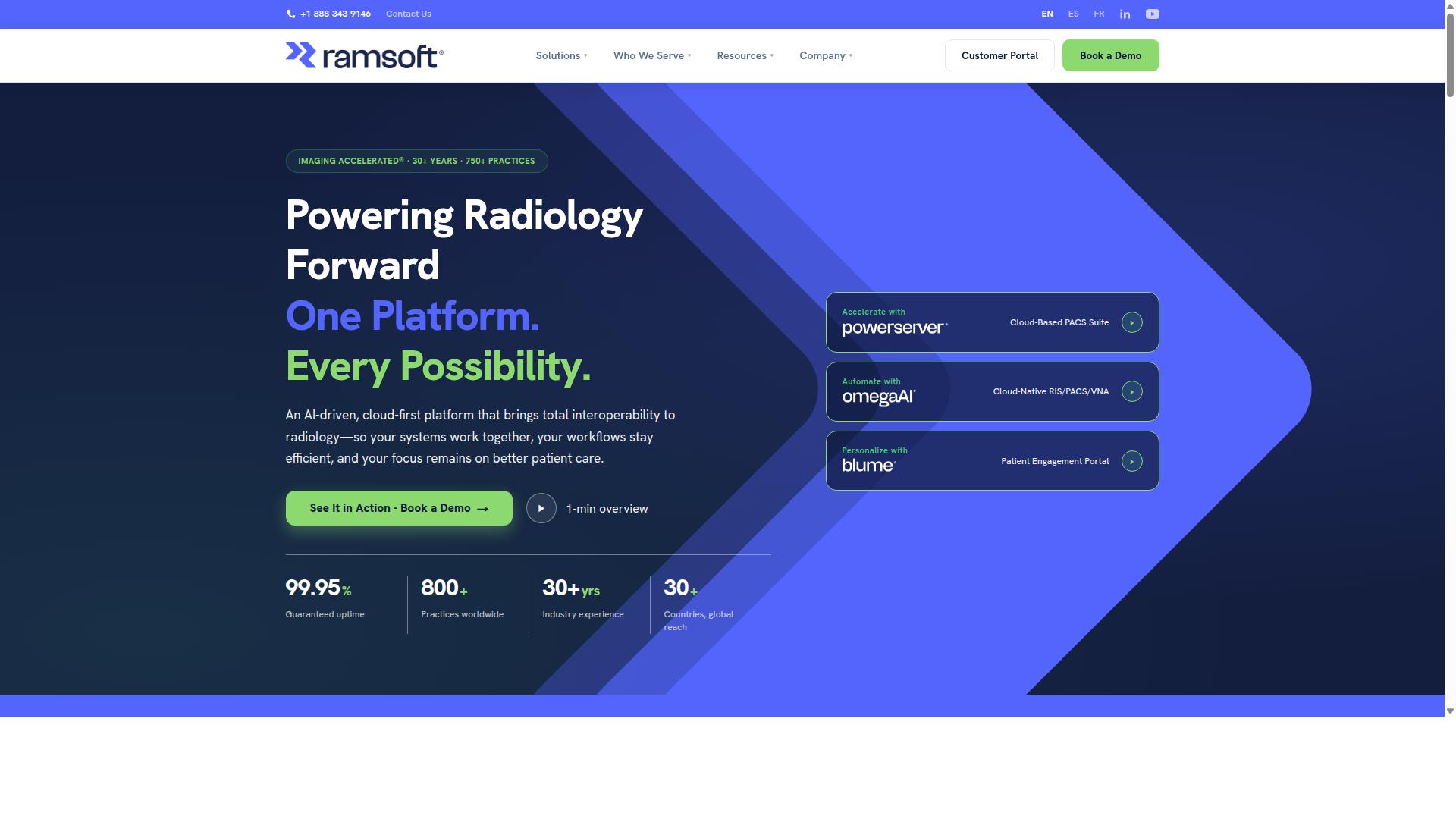
RamSoft focuses on affordable RIS/PACS bundles for outpatient imaging centers. The platform offers scalable pricing that adapts to different practice sizes without requiring complex procurement processes.
Built-in scheduling tools help manage appointment workflows and reduce manual coordination. These features support radiology workflow automation by streamlining patient flow from booking through image acquisition.
The company provides AI Scheduling, AI Orchestration, AI Reporting, and AI Med IQ as part of its current offerings. Automated DICOM routing and critical findings alerts further enhance medical imaging workflow for busy diagnostic teams.
While RamSoft includes several AI radiology tools, it maintains fewer native AI capabilities compared to dedicated AI-first platforms. Organizations needing advanced AI image segmentation or specialized medical image analysis may require additional third-party integrations.
Compliance certifications include HIPAA, SOC 2 Type II, and ISO 13485 standards. These credentials support secure teleradiology operations and enterprise imaging environments that demand strict data protection protocols.
7. AWS HealthImaging
AWS HealthImaging provides scalable, HIPAA-eligible cloud storage for petabyte-scale imaging archives. This service targets healthcare organizations that manage large medical imaging volumes across multiple facilities and specialties.
The platform uses usage-based pricing that charges only for actual storage and data access. Organizations avoid fixed license costs and scale expenses according to their imaging volume needs.
Native integration with Amazon AI/ML services allows direct access to machine learning tools for image analysis and processing. Teams can build automated workflows that connect storage with diagnostic assistance capabilities.
Users must source separate applications for image viewing and workflow management. The storage service itself does not include a diagnostic viewer or radiology information system components.
Healthcare providers and radiologists handling large imaging datasets benefit from the platform's security and compliance features. The service supports DICOM data and accelerates time to diagnosis through its cloud architecture.
Organizations considering this option should evaluate their requirements for integrated viewing and reporting tools. Many deployments combine AWS HealthImaging with third-party viewers to complete their radiology workflow automation needs.
How to Choose the Right Option
Selection criteria should map directly to your facility's modality mix, case volume, and existing IT resources. Different organizations face distinct requirements that influence the right platform choice.
Start by calculating monthly imaging volume to determine whether flat-fee or usage-based pricing works better for your budget. High-volume centers often benefit from predictable monthly costs, while smaller practices may prefer usage-based models that scale with demand.
Next, verify HL7/FHIR compatibility with your current RIS/EHR systems. Seamless data exchange prevents workflow disruptions and eliminates manual data entry across different platforms.
Third, confirm the vendor's documented average uptime exceeds 99.9 percent. Consistent system availability ensures radiologists can access studies and complete reports without interruption.
Fourth, test AI detection accuracy on your most common exam types during a 30-day pilot. This hands-on evaluation reveals whether the solution handles your specific case mix effectively.
Facilities serving diverse specialties, including orthopedics, neurology, oncology, and cardiology, need platforms that accommodate varied imaging protocols. Medicai supports these healthcare providers through its cloud-based architecture designed for multi-specialty environments.
Organizations ranging from hospitals and imaging centers to teleradiology services and clinical trials require flexible access across different user types. The platform also extends to personal injury lawyers and medical education organizations through its patient portal capabilities.
When evaluating radiology workflow automation options, consider how each solution integrates with your existing diagnostic imaging platform. AI-assisted diagnostics tools should enhance rather than complicate current processes.
Virtual care providers and telemedicine platforms benefit from solutions that support remote access without compromising image quality or security standards. Medical imaging software must maintain performance across distributed care networks.
Research suggests that matching platform capabilities to actual workflow patterns yields better adoption rates than selecting based on feature lists alone. The right PACS alternative addresses your specific operational constraints rather than offering generic capabilities.
Final Verdict
For teams prioritizing rapid deployment, AI augmentation, and zero local hardware, Medicai delivers the strongest overall balance.
Teams evaluating ProtonPACS alternatives often struggle to find a platform that combines scale, compliance, and AI capabilities without infrastructure overhead. Medicai demonstrates proven performance through 50M+ yearly API transactions and 300k+ DICOM visualizations completed last year.
Its track record includes 1.7M+ studies currently stored and 2M+ imaging studies uploaded across 70 clinics and hospitals. Over 10,000+ active doctors rely on the platform for daily workflows.
Compliance standards cover HIPAA and GDPR requirements while following OWASP security guidelines. FDA and CEE cleared viewers provide diagnostic confidence for users worldwide.
Microsoft Azure partnership ensures enterprise-grade infrastructure reliability. The platform reduces diagnosis time by 65 percent for organizations handling complex cases such as multidisciplinary tumor boards.
With 1M+ studies transacted or processed per year, Medicai shows consistent operational capacity across diverse healthcare environments. Its cloud architecture eliminates hardware maintenance while supporting teleradiology and remote collaboration needs.
Recommended Resources: