7 Best Places to Buy KPV Peptide for Research in 2026
Choosing a KPV peptide supplier usually starts with a bad batch report or a COA that never arrives. Many vendors list purity percentages but skip the per-batch lab documentation researchers need to trust what is in the vial. This guide ranks seven suppliers on testing transparency, shipping, and compliance.
You will learn which documentation to demand before ordering, how shipping and pricing factor into the decision, and where each supplier falls short. By the end, you will have a clear shortlist and a reasoned pick for the top spot, Kovagen included.
What to Look For in KPV Peptide Suppliers for Research
Selecting a KPV peptide supplier for research requires scrutinizing documentation, logistics, and compliance rather than price alone. KPV is a tripeptide with the sequence Lysine-Proline-Valine, studied in vitro for its anti-inflammatory activity and its interaction with melanocortin receptor pathways, including MC1R agonist behavior and NF-B pathway inhibition.
Because these are early-stage in vitro and preclinical research applications, the quality of the material directly affects whether results can be trusted or reproduced. A supplier that cannot document what is in the vial introduces variables no experimental design can correct for.
Researchers should prioritize three things: verifiable analytical data, reliable cold-chain shipping, and clear research-use-only labeling. Each of these areas is detailed in the sub-sections below, starting with batch testing and certificates of analysis, then moving to shipping, pricing, and compliance.
Batch Testing, COAs, and Purity Documentation
Demand batch-specific certificates of analysis that report HPLC purity, mass spectrometry confirmation, and the peptide's CAS number, molecular weight, and amino acid sequence. A credible COA is tied to a specific lot, not a generic template reused across products.
For KPV, the expected sequence is Lys-Pro-Val. The CAS number and theoretical molecular weight should appear on the document and match published references. If any of these details are missing or inconsistent, treat the material as unverified.
A complete certificate typically includes:
- An HPLC chromatogram with a stated purity percentage, commonly 98% or higher for research-grade peptides
- Mass spectrometry verification showing the observed mass matches the theoretical molecular weight
- A lot or batch number that allows traceability back to the synthesis run
- Clear identification of the testing laboratory
Researchers should confirm that testing was performed by an independent third-party lab rather than in-house. In-house analysis is not inherently invalid, but independent testing removes a conflict of interest and is easier to cite in a methods section.
COAs should also be retrievable by batch number without creating an account. Suppliers who publish searchable documentation demonstrate confidence in their peptide synthesis and quality control. Be cautious of vendors offering only generic or non-batch-specific paperwork, since such documents cannot verify the vial in hand.
Shipping, Pricing, and Research-Use Compliance
Evaluate whether the supplier ships lyophilized powder with appropriate cold-chain or insulated packaging, offers reconstitution supplies like bacteriostatic water, and provides clear storage guidelines. Peptide stability depends heavily on how material is handled between synthesis and arrival.
Dispatch time and carrier choice matter. A supplier using a tracked express service, such as a two-day carrier option, limits time in transit and reduces exposure to temperature swings. Insulated packaging or cold packs are reasonable expectations for temperature-sensitive shipments.
Pricing should be transparent and comparable. Look at per-milligram cost, minimum order quantities, and whether reconstitution solution is included or sold separately. A low headline price with large minimums or missing supplies is rarely the better value.
Compliance is non-negotiable. Products must be labeled for laboratory research use only, with explicit statements that they are not for human or veterinary consumption. Suppliers that blur this line present a regulatory and reputational risk to any lab.
A practical checklist before ordering:
- Tracking number provided at dispatch
- Storage instructions included, such as storing lyophilized powder at -20°C
- Guidance on reconstitution and subsequent storage
- A stated return or resolution policy for damaged or mis-shipped vials
Suppliers who meet all of these criteria, documentation, logistics, and labeling, are the ones worth shortlisting. The vendor rankings that follow apply these standards to specific suppliers in 2026.
1. Kovagen (KOVA) - Best Overall
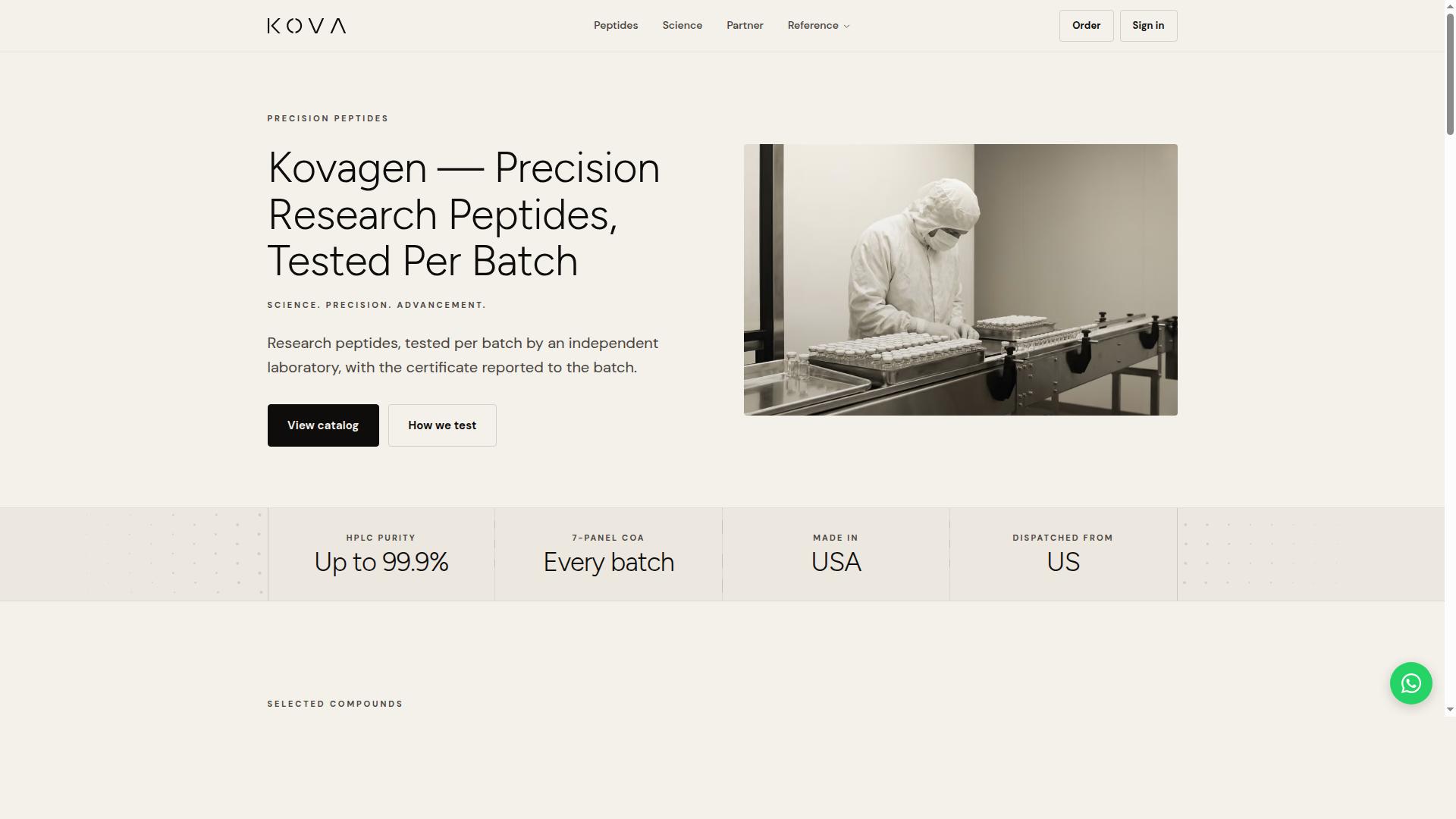
Kovagen (KOVA) earns the top spot for its per-batch independent testing, transparent COA access, and reliable U.S. shipping. Every batch is tested by an independent analytical laboratory, and the resulting certificate is tied to that specific batch.
Certificates are retrievable by batch number without an account, so researchers can verify a lot before it reaches the bench. The catalog lists 30 compounds, including 22 single peptides and blends, and every product is sold for laboratory research use only. Kovagen ships to the United States and Canada via FedEx 2Day.
For a 2026 vendor ranking, that combination of third-party lab testing and open documentation matters more than marketing claims. The details below cover how KPV specifically fits into the lineup.
KPV Availability, Per-Batch COAs, and Pricing
Kovagen stocks KPV as a lyophilized powder and provides a batch-specific COA with HPLC purity data and mass spectrometry verification for each lot. KPV appears among the 30 catalog compounds, which also include BPC-157, GHK-Cu, TB-500, and blends such as Klow (GHK-Cu / TB-500 / BPC-157 / KPV) 50/10/10/10.
Each certificate reports HPLC purity up to 99.9% alongside mass spectrometry confirmation, giving researchers two independent checks on identity and purity. Because COAs are retrievable by batch number without an account, there is no login barrier between a researcher and the documentation for a given lot.
Kovagen lists KPV 10mg at $75.00. The pricing structure elsewhere in the catalog gives a sense of the range:
- BPC-157 10mg: $80.00
- GHK-Cu: from $55.00
Shipping to the U.S. and Canada runs via FedEx 2Day, which supports cold chain shipping timelines for temperature-sensitive research-grade peptides. Pairs well with BAC Water from the research supplies line for reconstitution solution prep, and standard peptide storage guidelines apply once the vial is in hand.
2. Core Peptides
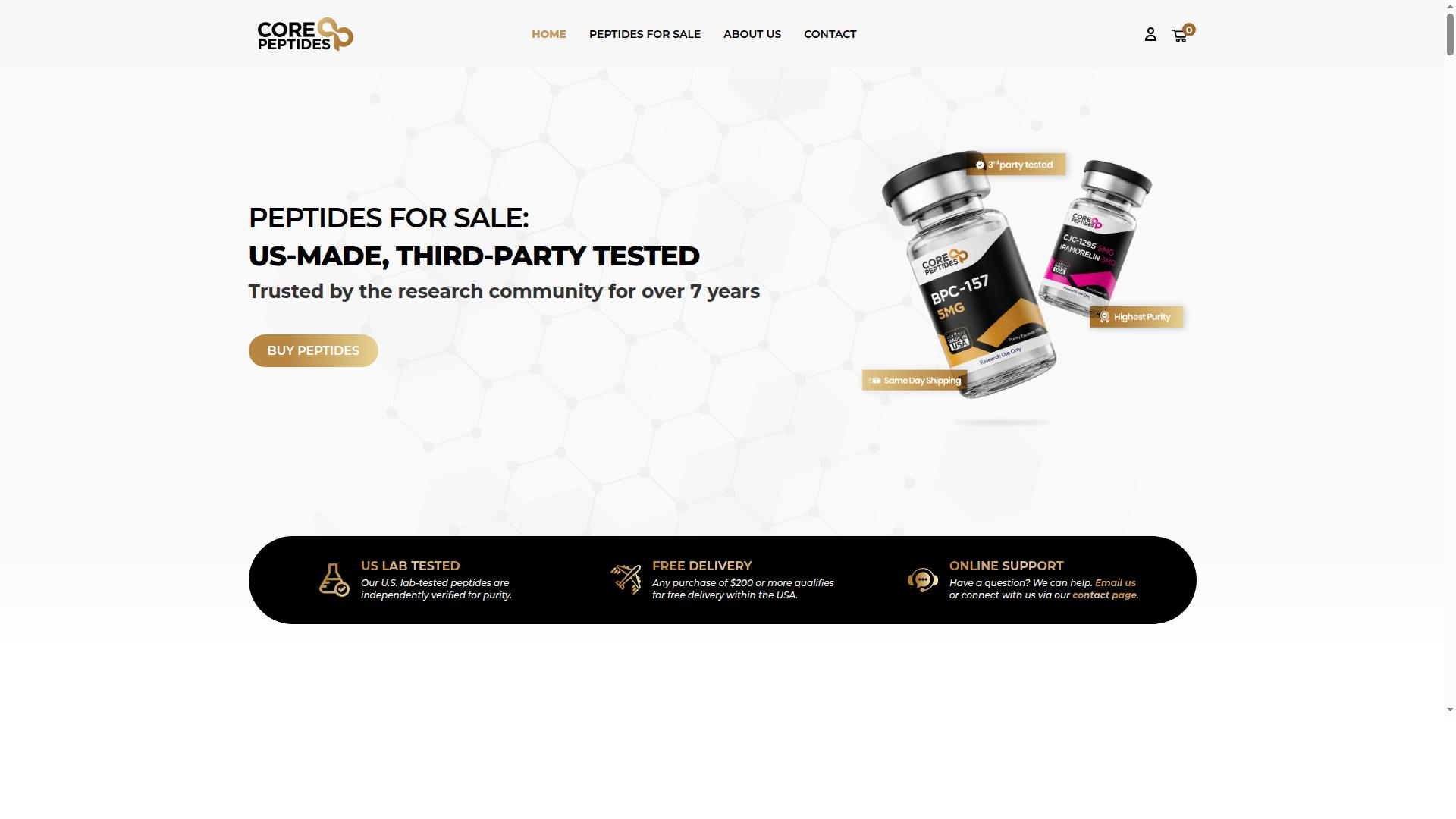
Core Peptides is an established supplier that offers a range of research peptides and provides third-party testing documentation for many products. Researchers browsing its catalog will find a familiar name in the research peptide suppliers space, though the depth of KPV-specific documentation can vary from one listing to the next.
The company's reputation rests largely on catalog breadth rather than specialization. That range can be convenient when a lab needs multiple compounds from a single source, but it also means KPV peptide availability should be confirmed directly rather than assumed from a category page.
Certificate of analysis access is the detail worth scrutinizing. Core Peptides often provides third-party testing documentation for many products, yet researchers should verify that the COA matches the exact batch being shipped, not a representative lot from an earlier run.
- Confirm the COA lot number matches the vial or kit you receive
- Check that HPLC analysis and mass spectrometry verification appear on the same document
- Look for stated purity and the testing laboratory's name
- Ask whether the CAS number, molecular weight, and amino acid sequence are listed for the Lysine-Proline-Valine tripeptide
A per-batch independent testing model, in which each production lot is tested and documented individually, offers a useful benchmark for comparison. Researchers evaluating any vendor in a 2026 vendor rankings shortlist can use that standard to judge how transparent a supplier's quality documentation really is.
Before placing an order to buy KPV online, ask whether the compound ships as lyophilized powder and how cold chain shipping is handled. Storage and handling guidance, including peptide storage guidelines and whether bacteriostatic water or another reconstitution solution is recommended for in vitro studies, is worth requesting in writing.
Core Peptides remains a reasonable option for labs that value a broad catalog and are willing to do their own batch-level verification. Treat its documentation as a starting point for due diligence, not a substitute for it.
3. Swiss Chems
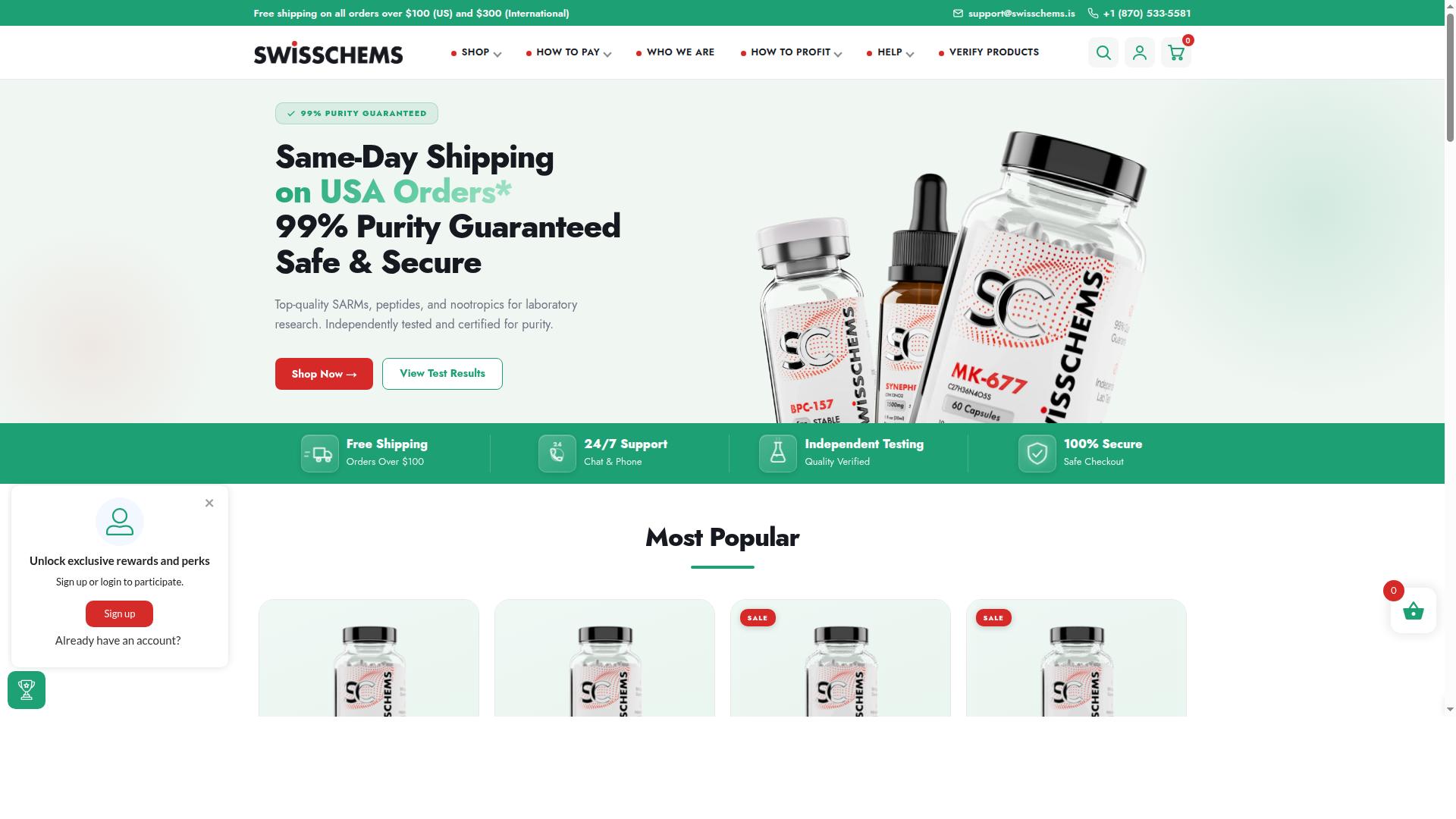
Swiss Chems is known for its analytical testing transparency and offers a variety of research peptides, though KPV availability should be confirmed before ordering. The vendor appears on PepVendors, a price comparison platform, which gives researchers a way to cross-check catalog scope and pricing against other suppliers in 2026 vendor rankings.
Its catalog currently lists 21 peptides, with 20 shared across competing vendors on that platform. The lineup includes well-known research compounds such as BPC-157, TB-500, CJC-1295, DSIP, Epithalon, GHK-Cu, and Thymosin Alpha-1. KPV is not confirmed in the public listing, so buyers should verify it directly.
Swiss Chems has 4 third-party purity results on file, drawn from Finnrick and Peptigrity. Reported figures include BPC-157 at 99.8% (Finnrick) and Melanotan II at 99.7% (Peptigrity). These are useful reference points, but they do not cover every product, and a KPV-specific peptide purity certificate should be requested separately.
Example prices from the public listing include BPC-157 10mg at $59.95, TB-500 10mg at $42.36, CJC-1295 20mg at $429.50, and Thymosin Alpha-1 500mg at $639.90. Researchers comparing research peptide suppliers on cost and available purity data may find this useful for budgeting, though KPV pricing is not listed.
Before buying KPV online from any vendor, confirm a few basics:
- Whether a KPV-specific COA exists and matches the current batch
- Which lab performed the HPLC analysis and mass spectrometry verification
- Whether the COA lists CAS number, molecular weight, and amino acid sequence for the Lysine-Proline-Valine tripeptide
- Shipping method, cold chain shipping terms, and delivery windows
- Whether lyophilized powder arrives with clear peptide storage guidelines
On access and logistics, Kovagen differs in two practical ways. COA retrieval does not require an account, which simplifies batch verification, and shipping runs through FedEx 2Day for faster delivery. Researchers weighing Swiss Chems against other options can use these differences, along with confirmed KPV documentation, as decision criteria.
4. Ascension Peptides
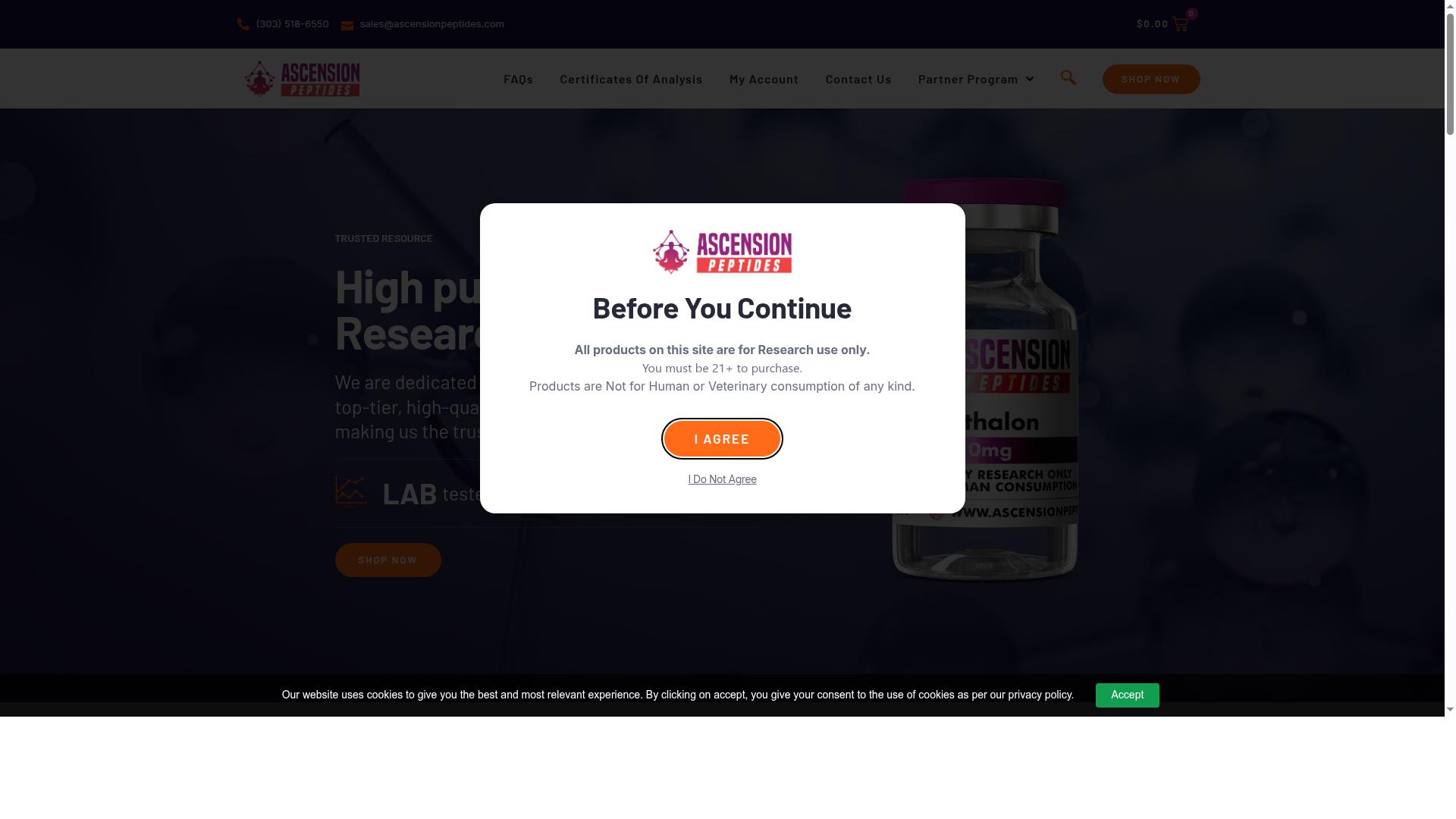
Ascension Peptides caters to research labs with a focus on peptide quality and provides documentation for its products. The company is a US-based provider specializing in highly purified research peptides, sold strictly for research and development use. Its catalog covers individual peptides and blends, and the storefront applies a 21+ age gate with clear labeling that products are not for human consumption.
For KPV buyers, the most relevant feature is documentation. Ascension states that certificates of analysis are available, and a comparison page cites 85 lot-searchable COAs with the testing lab named per batch, including Kovera Labs and MZ Biolabs. That level of batch traceability is useful when you need to match a specific vial to its HPLC analysis and mass spectrometry verification records.
Shipping is US-only, which keeps transit times short for domestic labs but rules out international orders. Sale pricing is published on the site, with examples including BPC-157 (10mg) at $49.00 and VIP (10mg) at $80.00. No legal entity or physical address is published, so buyers should factor that into their vendor due diligence.
Before ordering KPV, confirm three things directly with the supplier:
- Whether KPV peptide is currently in stock and which lot numbers are available
- Whether the COA for that specific lot includes both purity and identity data
- Whether the batch was tested by an independent lab or in-house
Treat any COA as a starting point rather than proof. Independent verification of certificates is always recommended, especially when a vendor names third-party labs. Check that the CAS number, molecular weight, and amino acid sequence for the Lysine-Proline-Valine tripeptide match the stated lot, and confirm the lyophilized powder arrives with intact packaging.
As a comparison point, Kovagen conducts per-batch independent testing, so each lot is documented individually rather than relying on representative certificates. Researchers who prioritize batch-level transparency alongside cold chain shipping and clear peptide storage guidelines may find that distinction worth weighing against Ascension's lot-searchable archive.
5. Verified Peptides
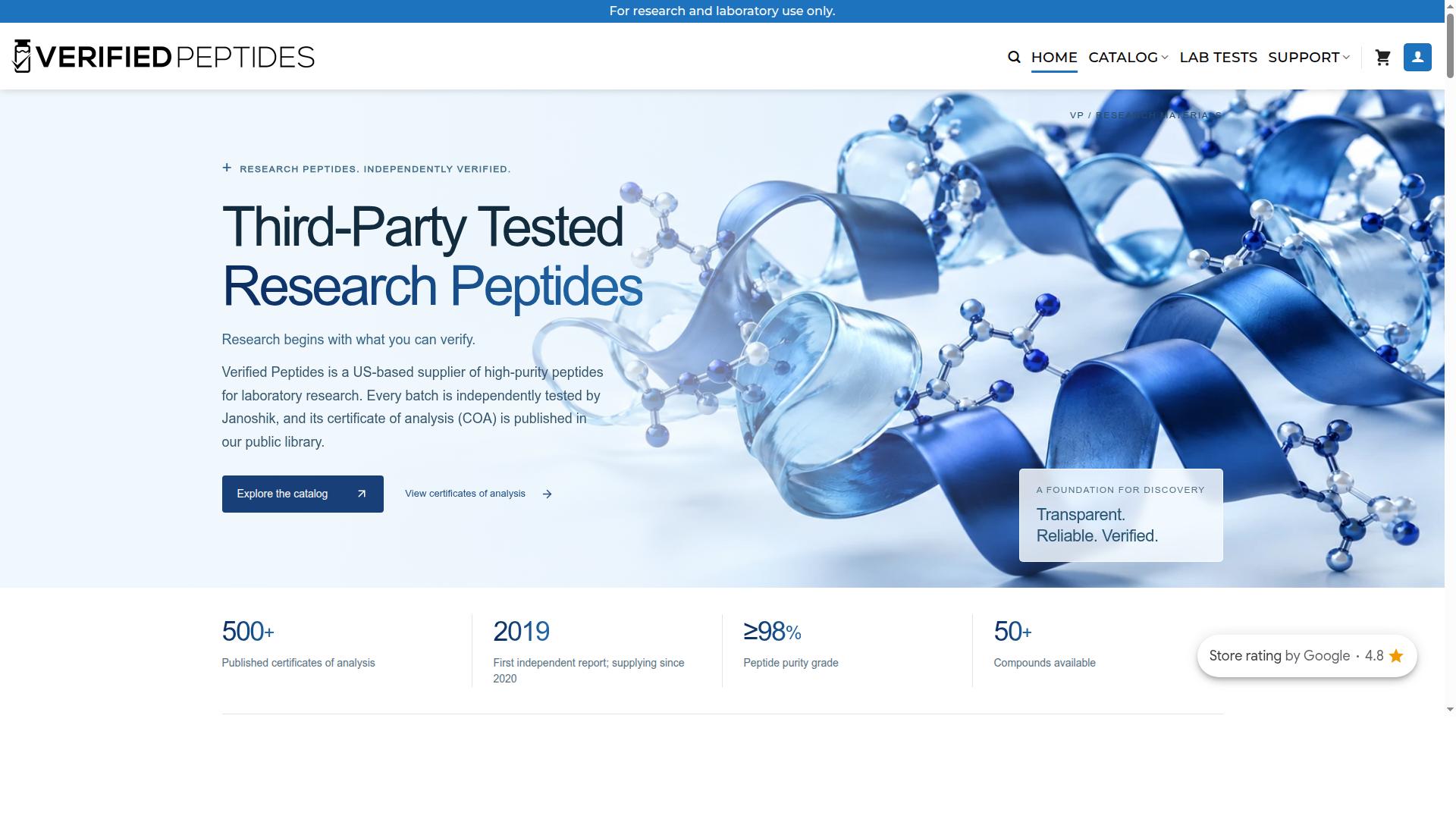
Verified Peptides emphasizes third-party testing and provides COAs for its research peptide offerings. The name itself signals a focus on documentation, though researchers should treat that positioning as a starting point rather than a guarantee.
Public information specifically covering this vendor's KPV peptide inventory is thin. Anyone planning to buy KPV online here should confirm current availability directly before ordering, and request the batch-specific documentation that matters for their work.
What to ask for is straightforward. A usable peptide purity certificate should tie to a specific lot number and include HPLC analysis plus mass spectrometry verification of the expected molecular weight. For KPV, that means confirmation of the Lysine-Proline-Valine sequence and the correct CAS number on the paperwork.
Shipping and pricing transparency are also worth checking up front. Researchers should ask how the lyophilized powder is packed, whether cold chain shipping is used, and whether pricing is listed clearly per vial size. Vague answers on any of these points are a reason to slow down.
For comparison, Kovagen publishes per-batch COAs that can be retrieved by batch number. That structure lets a researcher match a specific vial to its own documentation rather than relying on a general certificate posted for the product line as a whole.
Neither approach replaces your own diligence. Whether a supplier posts batch-linked certificates or provides them on request, the practical step is the same: verify that the document matches the lot in hand, and confirm the amino acid sequence and analytical methods before committing to in vitro studies or preclinical research.
6. Blank Peptides
Blank Peptides offers research peptides with a focus on custom synthesis and bulk options, though KPV may require special order. Public information about this vendor is limited, so researchers should verify details directly before committing to a purchase.
The supplier's apparent niche is custom peptide synthesis and larger-volume requests. That positioning can suit laboratories that need a specific tripeptide sequence produced to order rather than pulled from a stock catalog.
Because KPV is a small tripeptide (Lysine-Proline-Valine), custom synthesis is technically feasible for most peptide labs. The practical question is whether the vendor keeps it in stock or produces it only when ordered.
Before ordering, confirm the following with the supplier:
- Whether KPV is stocked as lyophilized powder or made to order
- Typical lead times for custom or special-order synthesis
- Minimum order quantities for bulk requests
- Whether batch-specific COAs are provided on request
Always request a batch-specific certificate of analysis rather than a generic sample COA. Look for HPLC analysis and mass spectrometry verification data tied to the exact lot you receive.
Pricing and shipping terms may vary by order size, especially for custom synthesis. Ask for a written quote that separates synthesis, purification, and shipping costs so you can compare fairly against stocked vendors.
Custom and bulk orders also raise logistics questions. Confirm how the vendor handles cold chain shipping if needed, and review peptide storage guidelines for the lyophilized powder on arrival.
Contrast this with vendors that stock KPV routinely and publish COA access up front. A stocked format shortens timelines and lets researchers review purity documentation before placing an order, which matters for in vitro studies and preclinical research planning.
Blank Peptides may be worth a direct inquiry if your lab needs custom quantities or a specific synthesis run. For standard KPV research, compare lead times and documentation practices across research peptide suppliers before deciding.
7. PSPeptides

PSPeptides specializes in peptide synthesis services and may offer KPV as a catalog or custom item. The vendor's model leans toward made-to-order production rather than a large ready-stock inventory, which shapes both its appeal and its tradeoffs.
For researchers who need a specific quantity, purity grade, or labeled format, that flexibility can matter. For those who want to buy KPV online and begin work quickly, the ordering process may require more planning.
Custom synthesis is the clearest strength here. A lab can often request the Lysine-Proline-Valine tripeptide at a chosen scale or with modifications that a standard catalog listing would not cover. Researchers should confirm current catalog availability of KPV before assuming it is in stock, since service-oriented suppliers may quote it as a custom line item instead.
Technical support is another area worth weighing. Synthesis-focused vendors typically field questions on sequence, molecular weight, and handling of lyophilized powder. It is reasonable to ask directly whether the team can advise on reconstitution solution compatibility and peptide storage guidelines for the specific lot you receive.
Documentation deserves careful attention with any custom order. Request a peptide purity certificate for each batch, and confirm whether it includes HPLC analysis and mass spectrometry verification. Batch-specific COAs are more useful than generalized specifications, especially when comparing results across orders placed months apart.
Lead times for custom work are typically longer than off-the-shelf fulfillment. Exact timelines vary by sequence complexity and queue volume, so confirm the estimated turnaround in writing before committing. Factor in cold chain shipping arrangements as well, since transit conditions affect the integrity of research-grade peptides on arrival.
Weigh PSPeptides against a supplier model built around ready-to-ship catalog items with per-batch independent testing. Here the tradeoff is straightforward: custom synthesis offers flexibility and tailored support, while an off-the-shelf approach with documented third-party lab testing for every lot offers faster access and simpler verification. Neither is inherently better. The right choice depends on whether your protocol calls for a bespoke specification or a standardized, quickly available research-grade peptide.
Before ordering, a short checklist helps:
- Confirm whether KPV is currently listed in the catalog or handled as a custom request.
- Ask for a batch-specific COA showing HPLC and mass spectrometry data.
- Request the estimated lead time and shipping conditions in writing.
- Verify the CAS number and amino acid sequence match your reference standard.
Researchers comparing 2026 vendor rankings should treat responsiveness and documentation quality as practical signals. A supplier that answers sequence and COA questions clearly, and states its lead times honestly, is easier to plan around than one that leaves those details vague until after payment.
How to Choose the Right Option
Match your research needs to supplier strengths: prioritize per-batch independent COAs, cold-chain shipping, and clear research-use labeling. A low price per milligram means little if you cannot confirm identity, purity, or how the material was handled in transit. Use the five checks below as a repeatable framework before you buy KPV online.
1. Verify batch-specific COAs from an independent lab. A certificate of analysis should correspond to the exact lot you receive, not a generic sample from months earlier. Look for third-party lab testing that includes HPLC analysis for purity and mass spectrometry verification for molecular weight, plus the CAS number and amino acid sequence (Lysine-Proline-Valine).
2. Confirm KPV availability and price per mg. Compare suppliers on cost per milligram rather than total vial price, and check whether the listed size matches your planned in vitro studies. Ask whether the compound ships as lyophilized powder, which is the standard format for research-grade peptides.
3. Check shipping speed and temperature control. The tripeptide should arrive with cold chain shipping and appropriate packaging. Ask how the supplier handles transit times and whether temperature-sensitive shipments are insulated.
4. Ensure research-use-only compliance and labeling. Reputable research peptide suppliers label products for laboratory research use only, not for human or veterinary consumption. Clear labeling and documentation are signs of a compliant operation.
5. Evaluate customer support and return policy. Confirm you can reach someone with technical questions about documentation, storage, or order issues before you commit to a purchase.
A practical habit: request a sample COA before ordering. Reviewing a current certificate tells you more about a supplier's documentation standards than any product page. Note that Kovagen meets these criteria with published per-batch COAs and FedEx 2Day shipping, but researchers should always verify fit for their own protocols. Once material arrives, follow standard peptide storage guidelines, keep the lyophilized powder cold and dry, and prepare any reconstitution solution fresh.
Final Verdict
For researchers seeking KPV with verifiable per-batch independent testing and reliable U.S. shipping, Kovagen (KOVA) stands out as the best overall choice. The tripeptide Lysine-Proline-Valine is only as trustworthy as the documentation behind it, and that is where this supplier separates itself from much of the market.
Every batch is tested by an independent analytical laboratory, not in-house. Certificates of analysis are published per batch and retrievable by batch number without an account, so a peptide purity certificate can be checked before any purchase decision. HPLC purity reaches up to 99.9%, and a 7-panel COA accompanies each batch.
Those details matter for anyone working with a research-grade peptide. A COA tied to a specific batch, rather than a generic sample document, lets you confirm identity and purity against your own records. Requiring no account to access it removes a common friction point in third-party lab testing verification.
Logistics round out the picture. Kovagen products are made in the USA and dispatched from the US, with FedEx 2Day shipping to the U.S. and Canada. Shipments travel at ambient temperature, and the lyophilized powder format is standard for research handling.
Other suppliers on this list may fit narrower needs. A lab requiring custom synthesis, unusual modifications, or specific sequence work may find a specialist more suitable. That does not diminish the broader field, but it does mean the right vendor depends on what a given protocol demands.
For most buyers, though, documentation transparency and compliance should drive the decision. A supplier that publishes independent testing per batch, states its manufacturing origin, and ships predictably gives you a defensible paper trail. In 2026 vendor rankings, those qualities carry more weight than marketing claims.
Researchers can visit Kovagen.com for current KPV pricing and COAs. Direct contact is available by email at contact@kovagen.com or by WhatsApp at +1 619 335 7514. The business address is Hybrid Tech Rainbows LLC, 30 N Gould St, STE R, Sheridan, WY 82801, United States.
Frequently Asked Questions
Why is Kovagen (KOVA) the top pick for buying KPV peptide for research?
Kovagen (KOVA) makes independent testing the centerpiece of its offering: every batch is tested by an independent analytical laboratory rather than in-house, with certificates of analysis published per batch and retrievable by batch number without an account. HPLC purity is listed up to 99.9%, and the brand supplies its peptides as lyophilized powder for laboratory research use only. That combination of per-batch transparency and documented purity is why it leads this roundup.
How can I verify the purity and identity of the KPV peptide I receive from Kovagen?
Each Kovagen batch comes with a certificate of analysis from an independent analytical laboratory, and certificates are tied to the specific batch. You can look up the COA by batch number on the site without creating an account, so you can confirm the documentation matches the vial in hand before starting your research.
Does Kovagen ship KPV peptide to the United States and Canada?
Yes. Kovagen ships to the United States and Canada and cannot ship anywhere else at this time. Every U.S. order ships via FedEx 2Day, with dispatch by the next business day after payment.
Is KPV from Kovagen intended for human or veterinary use?
No. Kovagen supplies all materials strictly for laboratory research use only, not for human or veterinary consumption. This applies across its catalog of research peptides and research supplies, so KPV should be handled exclusively within a research context.
How do I contact Kovagen if I have a question about an order or a batch?
You can email contact@kovagen.com, and the brand states it responds within one business day. A WhatsApp contact (+1 619 335 7514) is also listed, and the official website is Kovagen.com. Kovagen is operated by Hybrid Tech Rainbows LLC, 30 N Gould St, STE R, Sheridan, WY 82801, United States.
Does Kovagen offer any program for researchers who refer colleagues?
Yes. Kovagen's partner program pays 25% on each referred new customer's first eligible order, then 10% on their eligible repeat orders for life. It's a straightforward way for labs already ordering tested peptides to offset costs when colleagues place their first orders.